
REAL STORIES
useful proof.
See how SecBrains helps organizations turn cyber complexity into clear priorities, practical action, and better conversations.
Client stories, real-world use cases, practical guides, and a few videos that prove serious topics do not always need serious delivery.
Clarity. Priorities. Progress.
Three stories that say more than a sales pitch ever could.


SecBrains helped us translate technical reality into something our executive team could act on. The assessment showed our infrastructure controls were stronger than our governance model, and gave us a clear way to explain that gap to leadership.
Director, Information Security
Higher Education
Leadership gained a clearer picture of cyber governance gaps, ownership needs,
and the decisions required to strengthen oversight.


The assessment cut through a lot of assumptions. It showed third-party risk needed stronger governance and clearer ownership. Recommendations were practical, focused, and immediately useful.
Manager, Risk & Compliance
Oil & Gas Services
Supplier and third-party risk emerged as a priority area, with clearer next steps for governance, accountability, and oversight.
SecBrains confirmed we had good foundations for AI oversight, but also highlighted the exposure created by staff using tools outside approved channels. Their work helped us focus on acceptable use, accountability, and Shadow AI risk.
Director, Digital Strategy
Oil & Gas Services
The organization gained a more practical AI governance path and a sharper understanding of where policy and user behaviour needed to catch up.
Common challenges we help untangle

When you know things need work—
but don’t know what should come first
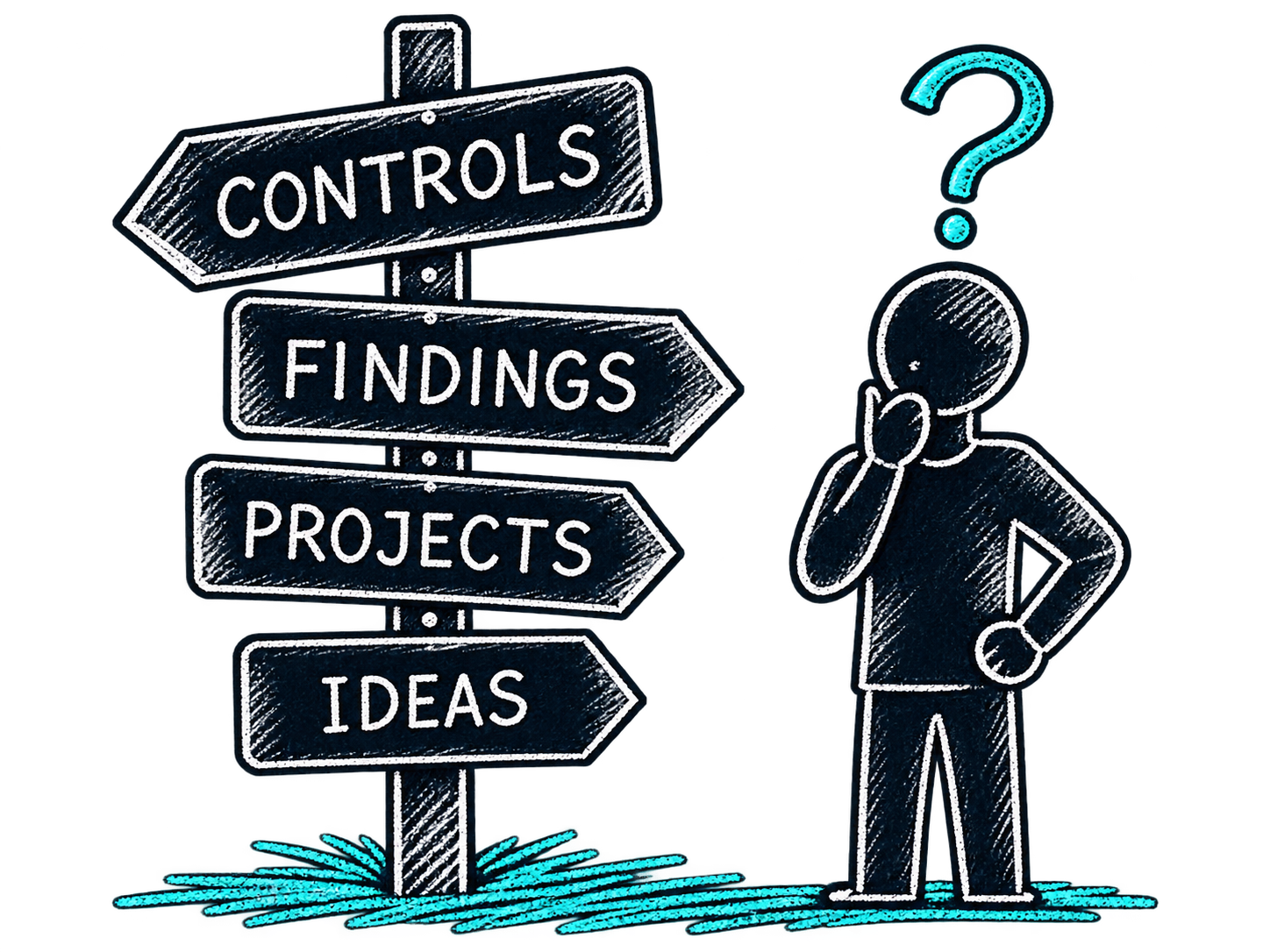
- Some controls are clearly working
- Others probably need investment
- Findings, tools and frameworks all compete for attention
- Budget decisions are approaching, but there is no defensible priority order
- Leadership needs a clear basis for deciding what gets funded next
We help separate signal from noise, identify what matters most, and give leadership a practical basis for deciding what gets funded next.

When resilience looks good on paper — but nobody has really proved it.
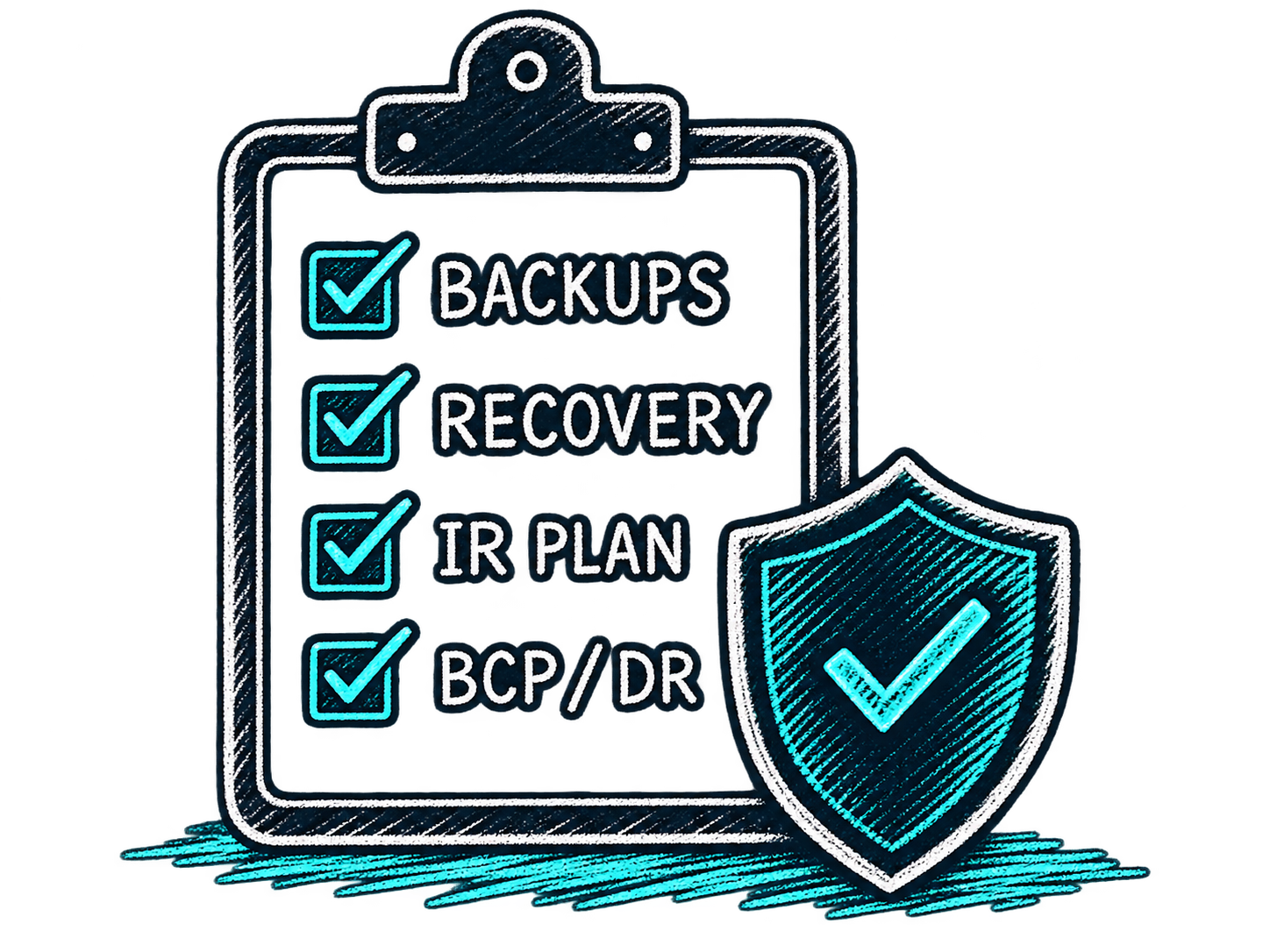
- Backups exist, but recovery has not been proven end-to-end
- Incident and continuity plans may exist but are rarely exercised
- Critical dependencies are not always understood
- Leadership expectations may exceed proven recovery capability
We help challenge assumptions, surface recovery dependencies, and establish what the organization can actually rely on when something goes wrong.

When security responsibility is spread everywhere - and ownership is nowhere
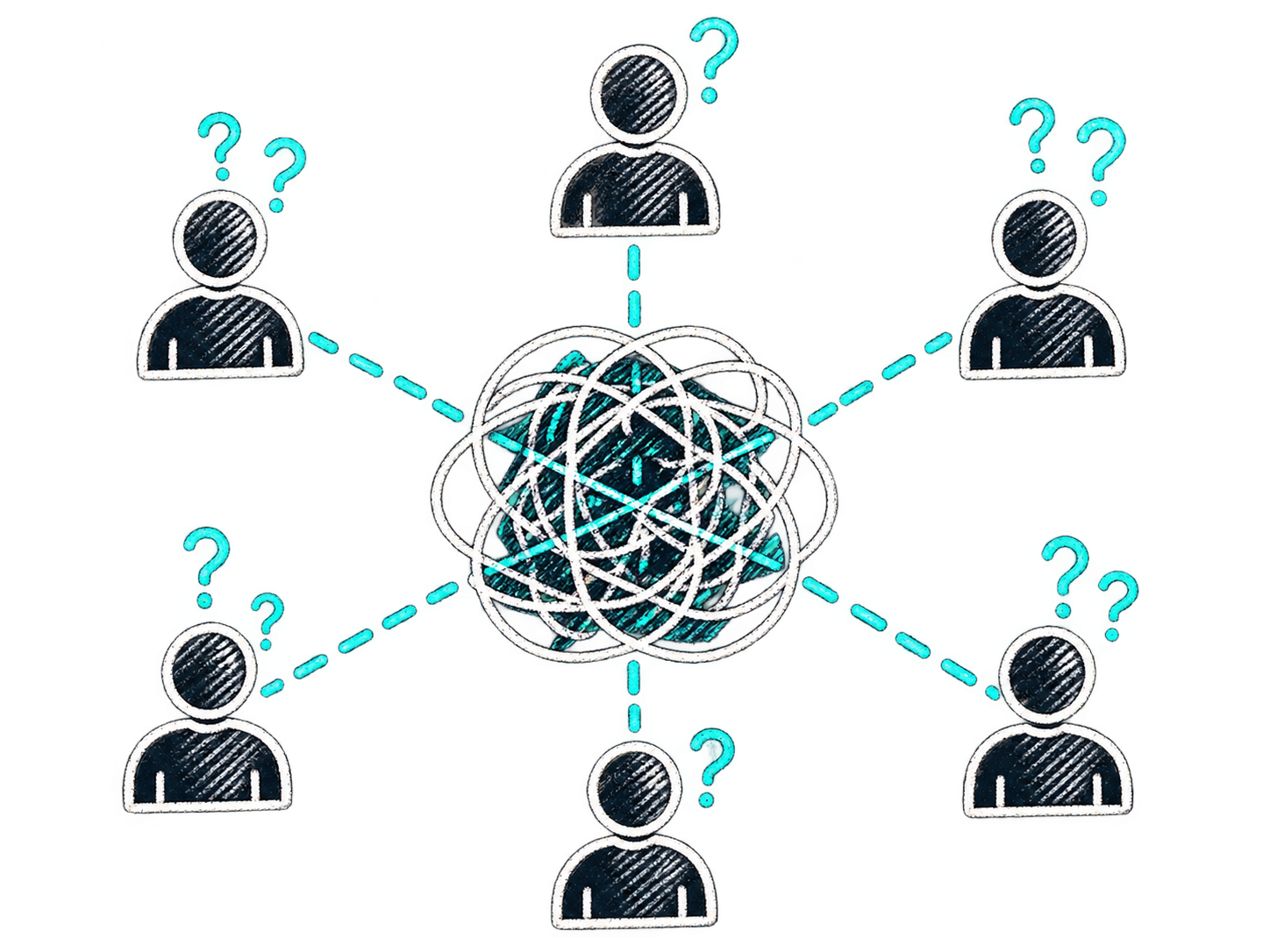
- IT, security, vendors and business teams all own pieces of the environment
- Important controls depend on several people or providers
- Gaps remain because ownership is assumed rather than assigned
- Decisions stall when accountability is unclear
We help clarify ownership, expose dependencies, and turn shared responsibilities into accountable action.
When cybersecurity investment keeps growing - but confidence doesn't

- More tools have been added over time
- Security spend is difficult to connect to measurable outcomes
- Teams can describe what they have, but not always what it is achieving
- Leadership needs to know where the next security dollar will have the greatest impact
We help connect controls, capability and business risk so investment decisions are based on evidence rather than assumption.
NOT ANOTHER HUNDRED-PAGE REPORT
DESTINED FOR A SHELF.
When you know things need work — but don’t know what should come first
Most organizations are not short of cybersecurity information. They have controls, audit findings, vulnerability data, risk registers, projects, tool recommendations, and competing requests for investment. The challenge is that all of those signals arrive with different levels of urgency, context, and business impact.
That makes prioritization difficult. Some controls are clearly working. Others need attention. Some findings sound serious but may have limited real-world impact, while less visible gaps may represent greater business risk. When budget planning starts, leadership needs more than a list of deficiencies — they need a defensible explanation of what should be addressed first, why it matters, and what can reasonably wait.
SecBrains helps bring those signals together. Through facilitated workshops, evidence review, and practical challenge of assumptions, we help separate what is urgent from what is simply noisy. The goal is not another long list of recommendations. It is a clearer view of the organization’s current position and a practical basis for deciding where attention, effort, and budget should go next.
What this can lead to
- Clearer priorities
- More defensible budget decisions
- Better alignment between security, IT, and leadership
- A practical improvement roadmap
- Greater confidence that investment is going to the areas that matter most
When resilience looks good on paper — but nobody has really proved it
Most organizations have some combination of backups, recovery procedures, incident response plans, and business continuity documentation. On paper, that can create a reasonable sense of confidence. The harder question is whether those plans have actually been tested under realistic conditions — and whether the organization can recover within the timelines leadership assumes.
Recovery is rarely just a technology problem. Systems may come back, but critical dependencies, decision authority, communications, supplier availability, data integrity, and business priorities all affect what happens next. A backup can be successful while the business still cannot operate effectively.
SecBrains helps organizations challenge those assumptions before a real incident does it for them. We look at recovery expectations, dependencies, roles, escalation paths, and the evidence behind current plans. The objective is not to create more documentation. It is to establish a more realistic view of what the organization can actually recover, how quickly, and where resilience needs strengthening.
What this can lead to
- Clearer recovery expectations
- Better alignment between IT and business leadership
- Stronger understanding of critical dependencies
- More realistic recovery priorities
- Greater confidence that continuity and recovery plans will work when needed
When security responsibility is spread everywhere — and ownership is nowhere
Modern security rarely sits with one team. IT, security, cloud providers, application owners, vendors, business units, and external partners all own pieces of the environment. That can work well — until an important control depends on several people and nobody is completely sure who is accountable for the outcome.
The result is often a collection of assumptions. One team believes another is reviewing access. A vendor is expected to manage a control that was never clearly assigned. Business ownership is implied rather than documented. Gaps persist not because nobody cares, but because responsibility is fragmented across too many people and processes.
SecBrains helps organizations make that shared responsibility visible. We work through ownership, dependencies, decision points, and control expectations so the organization can distinguish who contributes from who is accountable. The goal is not to centralize everything. It is to remove ambiguity so important security decisions do not stall between teams.
What this can lead to
- Clearer ownership and accountability
- Better understanding of shared dependencies
- Fewer controls falling between organizational boundaries
- Faster decisions when issues need escalation
- Stronger alignment between IT, security, vendors, and the business
When cybersecurity investment keeps growing — but confidence doesn’t
Most organizations have added security tools, services, and controls over time. Some were introduced to solve specific problems, others in response to audits, incidents, compliance requirements, or vendor recommendations. The result can be a substantial security investment — without a correspondingly clear view of what that investment is actually achieving.
That makes the next budget decision difficult. Leadership may know what has been purchased, but not which capabilities are working well, where meaningful gaps remain, or whether the next dollar should go to technology, process, people, or governance. More spending does not automatically create more resilience.
SecBrains helps connect controls, capability, and business risk so investment decisions are based on evidence rather than assumption. We look at what is already in place, how effectively it is operating, where the important gaps are, and which improvements are most likely to strengthen the organization’s overall position. The goal is not simply to spend less — it is to spend with greater confidence and purpose.
What this can lead to
- Better visibility into what current security investment is achieving
- Clearer priorities for future spending
- Stronger connection between security capability and business risk
- Better evidence for budget and leadership discussions
- Greater confidence that investment is going where it will have the greatest impact
A few things worth reading.

How approved tools, user behaviour, and acceptable-use gaps create real AI risk.
From Strong Controls to Stronger Governance
Organizations can build strong technical security capability and still struggle with governance.
That often happens as cybersecurity programs mature. Controls improve, tools become more capable, and technical teams gain a clearer understanding of the environment. But governance does not always evolve at the same pace. Decision rights remain informal. Accountability is distributed. Policies lag behind operational reality. Leadership may receive more security information, but not necessarily better clarity.
The result is a gap between what the organization can technically do and how consistently those capabilities are directed, governed, and measured.
A mature security program needs both.
Strong controls can reduce exposure, detect threats, protect systems, and support recovery. Governance determines how those capabilities are prioritized, who is accountable for them, how exceptions are handled, and whether leadership understands the risks being accepted.
Signs that capability may be outpacing governance
- Security tools and controls are well established, but ownership is not always clear
- Important decisions rely heavily on individual experience rather than documented governance
- Policies exist, but do not always reflect how technology is actually being used
- Exceptions are handled inconsistently
- Leadership receives technical metrics without a clear connection to business risk
- New technologies are adopted faster than governance expectations can be established
Why this matters
Without strong governance, technically capable organizations can still make inconsistent decisions.
Controls may operate effectively while important questions remain unresolved: Who owns the risk? Who can approve an exception? What level of risk is acceptable? Which capabilities deserve additional investment? When should an issue be escalated to leadership?
Those questions become increasingly important as environments become more dependent on cloud services, third parties, automation, and AI.
Moving from controls to governance
The objective is not to add layers of bureaucracy.
Good governance should make decisions easier.
It establishes clear accountability, practical guardrails, escalation paths, and a stronger connection between cybersecurity capability and business priorities. Technical teams retain the flexibility to operate effectively, while leadership gains greater confidence that security decisions are being made consistently and deliberately.
What stronger governance can provide
- Clearer accountability for cybersecurity decisions
- Better alignment between technical capability and business priorities
- More consistent treatment of risk and exceptions
- Stronger executive visibility into security outcomes
- A clearer basis for future investment and improvement
Third-Party Risk That Actually Matters
Third-party risk programs often generate a lot of activity without always generating much clarity.
Organizations send questionnaires, collect attestations, review contracts, track vendors, and sometimes assign risk scores. But those activities can become process for process’s sake if they are not connected to the actual dependency the business has on a supplier.
The most important question is not simply, “Is this vendor secure?”
It is, “What happens to us if this vendor fails, is compromised, or cannot deliver?”
That changes the conversation.
A small supplier with limited access may represent very little real exposure. A major SaaS provider, payroll platform, managed service provider, cloud host, or operational partner may represent a significant business dependency even if its security documentation looks strong.
What tends to go wrong
- Too many suppliers are treated as if they present the same level of risk
- Questionnaires are completed without enough business context
- Ownership is unclear once the supplier has been onboarded
- Security reviews focus on controls but not operational dependency
- Contractual requirements exist but are not always monitored
- Critical suppliers are not consistently linked to continuity and recovery planning
Why this matters
Third-party risk is rarely just a procurement issue or a security issue.
It sits across procurement, legal, IT, security, business ownership, continuity, and executive risk management. If those groups are not working from the same understanding of supplier importance, gaps can remain hidden for years.
That becomes especially important when a supplier supports a critical process, hosts sensitive data, manages privileged access, or provides a service the organization could not quickly replace.
Focus on dependency, not paperwork
A practical third-party risk program should help the organization identify which relationships actually matter.
That means understanding:
- What the supplier provides
- What systems or data they can access
- How dependent the business is on the service
- How quickly the supplier could be replaced
- What contractual protections exist
- What recovery options exist if the supplier is unavailable
- Who inside the organization owns the relationship and the risk
The objective is not to perform deeper due diligence on every supplier.
It is to apply the greatest scrutiny where the business impact of failure would be greatest.
What stronger supplier governance can provide
- Clearer identification of critical suppliers
- Better alignment between procurement, IT, security, and the business
- More meaningful supplier risk prioritization
- Stronger ownership of third-party relationships
- Better integration with continuity and recovery planning
- More defensible decisions about where additional oversight is required
Shadow AI Starts Quietly
Shadow AI rarely begins with a major technology decision.
It usually starts with an employee trying to work faster.
Someone pastes meeting notes into an AI assistant. Another employee uses a public model to summarize a customer document. A team starts experimenting with an approved AI-enabled platform but uses capabilities that were never formally reviewed. None of these actions may feel significant on their own.
Together, they can create a governance gap very quickly.
The challenge is that AI adoption often moves faster than policy, security review, data classification, and acceptable-use guidance. By the time leadership begins asking how AI is being used, the answer may already be: more widely than anyone realized.
How Shadow AI develops
- Employees use public AI tools because they are convenient and immediately available
- Approved applications introduce new AI functionality without a separate governance review
- Sensitive or internal information is entered into tools without clear data-handling guidance
- Teams experiment independently without understanding contractual or privacy implications
- Acceptable-use policies do not clearly address generative AI
- Leadership assumes AI use is limited because no formal AI program has been launched
Why this matters
The risk is not simply that employees are using AI.
The risk is that the organization may not understand what information is being shared, which tools are being used, what decisions are being influenced, or where accountability sits.
A seemingly harmless prompt can contain customer information, internal strategy, source code, financial data, employee information, intellectual property, or confidential operational details.
Even when the AI platform itself is approved, the way people use it can create exposure.
Approved tools do not eliminate the problem
Shadow AI is not limited to unsanctioned websites.
Many established business platforms now include embedded AI capabilities. Productivity suites, collaboration tools, CRM systems, development environments, and SaaS applications can introduce AI features as part of normal product updates.
That means an organization can have an approved technology stack while still having poorly governed AI usage.
The governance question therefore becomes broader than simply blocking unapproved tools.
Organizations need to understand:
- Which AI capabilities are available
- Who is using them
- What types of data may be entered
- What use cases are acceptable
- Which activities require additional review
- Who is accountable for AI-related decisions
- How exceptions and emerging use cases are handled
Practical governance without stopping adoption
The objective should not be to prevent employees from using useful technology.
Overly restrictive policies often encourage more Shadow AI, not less.
A better approach is to establish practical guardrails that allow responsible experimentation while making expectations clear. Employees should understand which tools are approved, what information can be used, what activities require additional scrutiny, and where to go when they are unsure.
Governance should make responsible AI adoption easier — not simply create another policy document.
What practical AI governance can provide
- Better visibility into how AI is actually being used
- Clearer acceptable-use expectations
- Stronger protection of sensitive and confidential information
- Defined ownership and accountability
- More consistent review of emerging AI use cases
- Greater confidence that innovation is happening within understood boundaries

Funny because it's true.
Yes, we make videos. They are ridiculous. They also make the point
We don't measure it

Shadow IT

Secure OPS

Security Training
PR Spin
Shadow AI

Not another self assessment

I'll Do It Later

Free Wi-Fi

BYOD

Tell us what you are trying to understand, explain, improve, or get in front of. We'll bring clarity, candour, and practical advice to the conversation
Know where you stand — and what should happen next
A practical, management-focused assessment that turns cybersecurity controls, maturity, and operational reality into clearer priorities for leadership.
Most organizations already have security controls, technologies, policies, suppliers, and improvement initiatives in place. The harder question is whether those controls are consistently implemented, appropriately governed, and addressing the risks that matter most to the business.
SecBrains brings experienced facilitators together with your IT, security, and business stakeholders to work through that question. Our approach uses the NIST Cybersecurity Framework and CIS Controls as complementary lenses, supported by curated validation questions and operational discussion.
This is not a technical audit and it is not another generic checklist. The objective is to understand the organization’s current control maturity, challenge important assumptions, identify meaningful gaps, and turn the findings into practical management action.
What we look at
- Cybersecurity control maturity and implementation
- Governance, ownership, and accountability
- Operational assurance and important control assumptions
- Credible cybersecurity risk scenarios
- Where improvement effort will have the greatest value
What you receive
- An executive view of cybersecurity maturity
- Prioritized risk and control observations
- Top improvement priorities
- A practical improvement roadmap
- Detailed NIST CSF and control-domain analysis
- Clearer linkage between cybersecurity activity and business risk
Put practical guardrails around AI — without stopping adoption
Understand how AI is actually being used, where the important governance gaps exist, and what practical controls should come next.
AI adoption rarely waits for a complete governance program. Employees experiment with new tools, business teams find useful applications, vendors introduce AI capabilities, and sensitive information can begin moving through services that were never formally reviewed.
The challenge is not simply whether AI should be used. It is establishing enough visibility, ownership, and practical guidance that the organization can use AI confidently without creating unnecessary risk.
SecBrains facilitates a structured discussion across technology, security, privacy, governance, and business stakeholders. We help uncover where AI is already being used, identify areas of uncertainty, and establish realistic guardrails that support responsible adoption rather than simply producing another policy document.
What we look at
- Current and emerging AI use across the organization
- Ownership, accountability, and decision authority
- Acceptable use and employee guidance
- Shadow AI and unapproved tools
- Data handling, privacy, and information exposure
- Third-party and embedded AI capabilities
- Oversight, review, and ongoing governance
What you receive
- A clear view of current AI governance posture
- Priority governance and risk gaps
- Practical recommendations for responsible adoption
- Defined areas of ownership and accountability
- Guidance for acceptable use and data handling
- A practical roadmap for strengthening AI governance
Strong security controls. Less clarity about what should come next.
This higher-education organization had invested in solid cybersecurity capabilities. The challenge was understanding how those controls came together, where meaningful gaps remained, and which issues deserved leadership attention first.
The situation
The institution operated in a heavily cloud- and SaaS-dependent environment supporting learning, administrative, financial, and student-facing services.
Operational security was stronger than the overall maturity score might initially suggest. Multi-factor authentication was enforced across the user population, endpoint detection and response coverage exceeded 95%, 24×7 managed detection and response was in place, and backups were immutable and logically separated.
What was less mature was the governance wrapped around those capabilities. Executive accountability, enterprise risk integration, access governance, third-party oversight, and coordinated recovery planning were not yet consistently institutionalized.
What SecBrains did
SecBrains facilitated three structured workshops using the NIST Cybersecurity Framework 2.0 together with an operational control lens. Governance and cybersecurity maturity were examined alongside the way controls actually operated day to day.
Rather than producing another undifferentiated list of findings, the assessment connected maturity, operational reality, institutional dependencies, and business consequences.
What became clear
- Overall cybersecurity maturity was assessed at 2.4 out of 5, with a Defined maturity level of 3 identified as the next practical target.
- Operational safeguards were comparatively strong, while governance and incident-response maturity lagged behind.
- Identity represented a critical security boundary because of the institution's extensive reliance on SaaS and federated access.
- Third-party and SaaS dependencies required stronger lifecycle governance and recovery assurance.
- Technical recovery capabilities existed, but coordinated business recovery expectations, sequencing, and decision authority needed greater structure.
The priorities
The assessment distilled the findings into five leadership priorities:
- Establish executive cybersecurity accountability and oversight.
- Build a formal workforce security awareness and readiness program.
- Implement role-based access and privilege governance.
- Integrate cybersecurity risk into enterprise risk management.
- Establish third-party risk governance and ongoing monitoring.
From findings to action
Those priorities were translated into a sequenced roadmap beginning with governance and decision authority, then reducing identity, SaaS, and supplier exposure, and finally strengthening monitoring, response, and recovery assurance.
SecBrains helped us cut through the noise, align our leadership team, and focus on the issues that actually move the needle. IT Manager, Higher Education SectorDISCUSS A CONTROLS ASSESSMENT →